The Ground Beneath Your House: Dayton's Three-Layer Soil Problem
Most homeowners never think about what is under the lawn until water shows up in the basement. In the Dayton area, the answer is more complicated than in many parts of the country. The region sits on a mix of glacial till, windblown silt, and river-bottom deposits left behind by the Great Miami River and its tributaries. Each layer behaves differently when it gets wet, and together they create conditions that push water toward your foundation.
Glacial till is the heavy, unsorted mix of clay, sand, gravel, and rock that glaciers dropped across Ohio thousands of years ago. The clay content is high, which means till does not drain well. When rain soaks in, the clay swells and holds moisture like a sponge with a clogged drain. Silt, often called loess when it is wind-deposited, is finer and more prone to washing away or shifting when saturated. River-bottom soils near the Great Miami corridor are sandier and more permeable, but they sit close to the water table, so groundwater rises quickly after heavy rain. If you have ever wondered why your neighbor two streets over has a dry basement and yours does not, the soil layer under each house may be the reason.
Why Ohio Till Causes Foundation Cracks and Basement Leaks
The clay-heavy till that covers much of the Kettering and Centerville areas is the root of many foundation problems. Clay expands when it absorbs water and shrinks as it dries. That cycle repeats with every wet season and dry spell, and it puts steady pressure on foundation walls. Over time, the expanding soil can bow walls inward, while the shrinking phase leaves gaps where water can travel. This is what professionals mean when they talk about soil movement, and it is one of the most common reasons Ohio till foundations develop cracks.
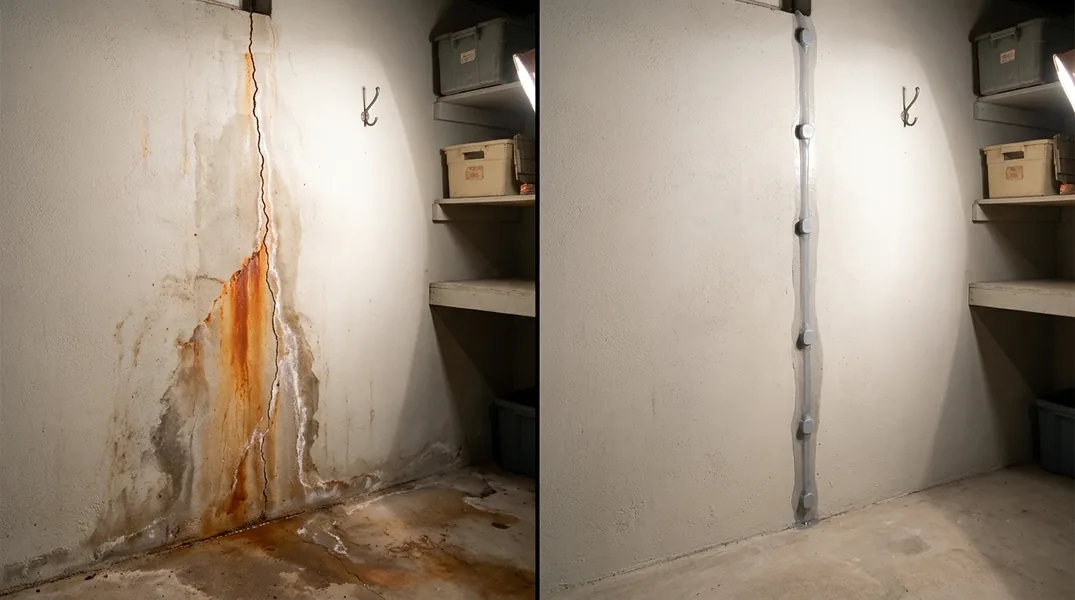
Once a crack forms, water finds it. Hydrostatic pressure, which is the weight of saturated soil pushing against your foundation, forces water through even hairline fractures. In river-bottom areas, the water table can rise high enough to press against the footing itself, which is why some basements leak at the floor seam rather than through the walls. If you are seeing damp spots, white powdery deposits, or actual puddles after storms, the soil around your home is likely doing exactly what Dayton's geology predicts. Ignoring it rarely works because the cycle repeats every year and cracks tend to widen rather than close on their own.
River Bottom Groundwater and the Basement Leaks Dayton Homeowners See
Homes near the Great Miami River, Twin Creek, and the older floodplain neighborhoods face a different challenge than hilltop properties. River-bottom groundwater responds fast to rainfall. A storm upstream can raise the water table under your slab within hours, and that water has to go somewhere. It seeps through cove joints, floor cracks, and the porous concrete that many mid-century basements were built with. Homeowners in Beavercreek and other low-lying areas often describe a basement that is dry in July and wet in March, which is a classic sign of groundwater rising rather than a roof or gutter problem.
This is where a targeted approach matters. Basement Waterproofing for river-bottom homes usually starts with managing water before it reaches the wall. That can mean improving drainage away from the foundation, sealing penetrations, and installing a system that collects water at the footing and moves it out. An Interior Drain Tile System is often the right fit because it captures groundwater at the lowest point inside the basement and directs it to a sump pump, even when the water table is high. The goal is not to fight the river, it is to give the water a controlled path out.
Foundation Waterproofing Near Me: When Dayton Soil Movement Needs a Pro
Some basement moisture is cosmetic, but soil movement is not. If you notice stair-step cracks in block walls, horizontal cracks, doors that stick in dry months, or a floor that seems to slope toward one corner, the soil around your foundation is likely shifting. These are the signs that separate a minor dampness issue from a structural one. A local contractor who understands Ohio till and river-bottom groundwater can tell the difference during an inspection, which is why searching for foundation waterproofing near me in Dayton usually leads homeowners to specialists rather than general handymen.
Foundation Waterproofing addresses the cause, not just the symptom. Depending on the inspection, that might involve exterior work such as grading, drainage corrections, and membrane application, or Exterior Basement Waterproofing that keeps soil water from ever touching the wall. In other cases, interior solutions are more practical and less disruptive. A reputable contractor will explain which approach fits your soil conditions and your budget rather than pushing one product for every home. If you want to understand what a project might involve before you commit, ask for a free estimate and a clear explanation of the recommended scope.
Basement Waterproofing Cost in Dayton: What to Budget
Homeowners researching pricing quickly learn that basement waterproofing cost varies widely because the soil, the foundation type, and the water source all differ from house to house. A river-bottom home with a high water table may need a sump system and drain tile, while a hilltop home with clay till and a bowed wall may need crack repair and wall stabilization. That is why flat quotes over the phone are rarely accurate and why a site visit matters.
As a general guide, minor crack sealing and exterior grading corrections are on the lower end, interior drain tile and sump installations fall in the middle, and full exterior waterproofing or structural repair sits at the higher end. The best way to budget is to get an itemized written estimate that separates labor, materials, and any structural work. Dayton Waterproofing provides that kind of detail so you can compare options fairly. Call (937) 818-4090 to schedule an inspection, or request a free estimate online and ask specifically how your soil type affects the recommendation.
Protecting Your Foundation Through Ohio's Wet and Dry Cycles
Even after waterproofing work is complete, the soil around your home will keep expanding and shrinking with the seasons. Simple habits make a real difference. Keep gutters clean and extend downspouts several feet away from the foundation so roof water does not recharge the clay right next to the wall. Maintain the grade so the ground slopes away from the house, and avoid planting thirsty shrubs directly against the foundation. In river-bottom neighborhoods, a battery backup sump pump is worth considering because power outages often happen during the same storms that raise groundwater.
It also helps to check your basement after heavy rain and note where moisture appears. Patterns tell a story: wall cracks point to soil pressure, floor seams point to groundwater, and musty smells without visible water often mean high humidity from a damp crawl space or slab. Sharing those observations with a professional makes the inspection faster and the recommendation more precise. Dayton's soil is not going to change, but the way your home handles it can. If you are ready to stop guessing and get a straight answer about your foundation, reach out to Dayton Waterproofing at (937) 818-4090 or visit the website to book a free estimate.
Looking for a professional basement waterproofing contractor in Dayton? Dayton Waterproofing responds fast for all your basement waterproofing needs.
Get a Free QuoteOur services: Basement Waterproofing · Interior Drain Tile System · Exterior Basement Waterproofing