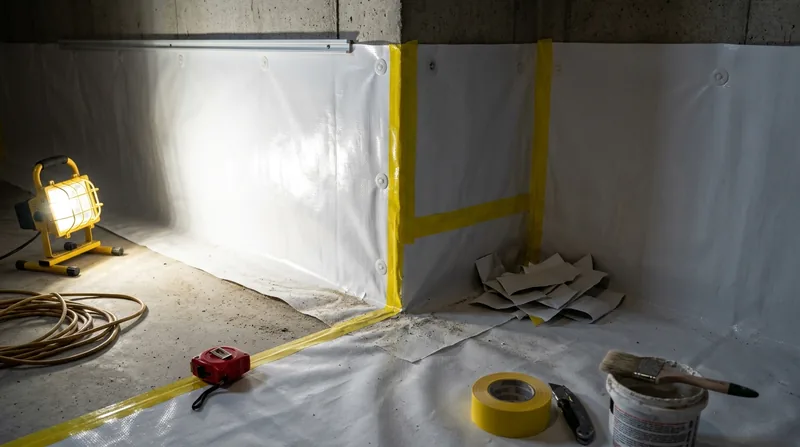




Dayton sits on glacial till and river-deposited silt and clay over limestone bedrock, and the Great Miami and Mad rivers keep the water table shallow in the river bottoms. In the Oregon District, Wright-Dunbar and Old North Dayton, 1900s brick and frame homes sit on full basements with stone, brick or early block walls, and moisture vapor pushes through those walls year after year. Vapor Barrier Installation in Dayton blocks that ground moisture vapor before it reaches the living space, sealing the walls and slab with heavy-duty sheet and taped terminations. We install below-grade vapor barriers across Dayton and the surrounding suburbs, from 1920s bungalows in Belmont to poured walkout basements in Beavercreek and Vandalia. If your lower level smells musty after a June storm, the barrier is usually the missing piece. Start with a free basement inspection and we will tell you straight what the walls are doing.
Why Vapor Barrier Installation Matters in Dayton's Older Basements
Dayton's freeze-thaw winters work cracks open every year, and spring thaw pushes water toward stone and early block walls that were never built with a modern moisture barrier. Efflorescence on the lower courses and a musty basement smell are the classic signs that vapor is moving through the masonry. A properly installed barrier stops that vapor at the wall face and the slab, so the basement stays dry between storms instead of sweating through the summer.
- Older stone and brick walls in South Park and Belmont wick ground moisture straight into the basement air.
- Shallow water tables in the river bottoms keep hydrostatic pressure on footing drains that were laid in clay tile a century ago.
- Poured walkout basements on sloped lots in Beavercreek and Springboro collect condensation on cool slab edges.
- Heavy April and June storms drive water against walls that have no dimple board or waterproof membrane behind them.
A barrier alone will not fix an active leak, but it stops the vapor that keeps a basement damp long after the rain stops.
Key info: A 1920s brick bungalow in Belmont with efflorescence on the lower block and a musty smell all summer is a textbook vapor barrier candidate once we confirm the wall is not actively leaking. If water is running in after rain, the barrier goes in after the drainage work, not before.
For permit questions on work that alters drainage or structural elements, the City of Dayton's building department is the authority, and rules vary by jurisdiction. You can verify local requirements through the City of Dayton offices before any work begins.
How We Install a Vapor Barrier in a Dayton Basement
We start by finding out where the moisture is actually coming from, because a barrier over a wet wall traps trouble instead of solving it. If the inspection shows hydrostatic pressure or failed footing drains, we recommend drainage first, and an interior drain tile system is often the better answer than exterior excavation. Once the wall and slab are ready, we install the barrier in a fixed sequence so the seams hold.
- We inspect the walls and slab for active seepage, efflorescence and failed parging before anything goes up.
- We clean and prep the masonry so the adhesive and terminations bond to solid surface.
- We hang heavy-duty barrier sheet from the top of the wall down to the slab, overlapping each course.
- We seal every seam and tape all terminations so vapor cannot bypass the sheet at the edges.
- We integrate the barrier with the sump basin and discharge line where the layout calls for it.
- We leave the space clean and walk you through what we installed and what to watch.
Every job ends with a clear explanation of how the barrier ties into the rest of your basement waterproofing system.
Key info: In a 1950s ranch in Huber Heights with a daylight basement, we ran the barrier down to the slab, taped the bottom termination, and tied it into a new sump basin because the old clay footing drain had collapsed. The homeowner got a dry wall face and a working discharge line in one visit.
Vapor Barrier Options We Install in Dayton
Not every basement needs the same sheet, and the right choice depends on wall material, slab condition and how much vapor is moving. Here is how the main approaches compare on Dayton homes.
| Approach | Description | Best for |
|---|---|---|
| Wall-hung barrier sheet | Heavy-duty sheet fastened from top of wall to slab with sealed seams | Stone and brick walls in older Dayton neighborhoods |
| Slab vapor barrier | Sheet laid across the floor with taped terminations at the cove | Poured slabs in Beavercreek and Vandalia subdivisions |
| Dimple board drainage mat | Drainage mat that channels water down to the perimeter drain | Walls with active seepage that need drainage plus vapor control |
| Barrier with sump integration | Sheet tied into the sump basin and discharge line | Basements with an existing or new sump pump |
| Sealed terminations and taped seams | Adhesive and tape detail at every edge and overlap | Any installation where vapor bypass at edges is a risk |
The right combination is decided on site after we see the wall, the slab and the drainage.
Vapor Barrier Installation Cost in Dayton: What to Expect
Most Dayton vapor barrier jobs start from $3 per square foot of wall and slab coverage, and the final number depends on how much prep the masonry needs and whether the barrier ties into a sump. A clean poured wall in Centerville is a different job from a 1910s stone foundation in Old North Dayton that needs parging repairs first. We give you a written scope before we start so there are no surprises on the invoice.
- Wall material and condition: crumbling parging or bowed block adds prep time.
- Coverage area: full perimeter walls plus slab cost more than walls alone.
- Drainage integration: tying into a sump basin or drain tile adds fittings and labor.
- Access: tight stairs and finished ceilings slow the crew down.
- Active moisture: if drainage work is needed first, that is quoted separately and honestly.
Getting two or three estimates is smart, and any contractor who quotes a barrier without inspecting the wall is guessing. Our full pricing overview lays out how we build a number.
Vapor Barrier Installation Near Me: How to Choose a Dayton Contractor
When you search for vapor barrier installation near me in Dayton, the list gets long fast. Here is how to sort the real specialists from the generalists before you sign anything.
- Confirm the company is licensed and insured and ask for the certificate.
- Get two or three written estimates with the same scope so you can compare fairly.
- Ask for local references on basements similar to yours, not just photos.
- Ask who pulls any permit required for drainage or structural work, and verify with the building department.
- Check HOA rules if you live in a subdivision in Beavercreek or Vandalia before exterior work starts.
We are a dedicated basement waterproofing specialist, not a general foundation firm or a plumber, and we will tell you when simple crack sealing is enough and when hydrostatic pressure means drainage comes first. Reach out through our contact page to set up a free inspection, and we will give you a straight answer about what your basement actually needs.
Vapor Barrier Installation in Dayton: Pricing Guide
| Service | Price | Details |
|---|---|---|
| Wall-hung vapor barrier | Starting at $3/sq ft | Includes prep, heavy-duty sheet, sealed seams and taped terminations on basement walls. |
| Slab vapor barrier | Starting at $3/sq ft | Covers floor sheet, cove terminations and sealant; slab condition affects the final rate. |
| Barrier with sump integration | On estimate | Ties sheet into sump basin and discharge line; needs on-site look at existing drainage. |
| Dimple board drainage mat | On estimate | Drainage mat plus vapor control for walls with active seepage; quoted after inspection. |
| Travel | Included | In Dayton and surrounding areas, no separate call-out or mileage fee. |
| Estimate | Free | Response within 24h at (937) 818-4090, no obligation to book. |
Indicative pricing, the exact cost depends on square footage, finish, and site access. Free personalized estimate within 24h at (937) 818-4090.


