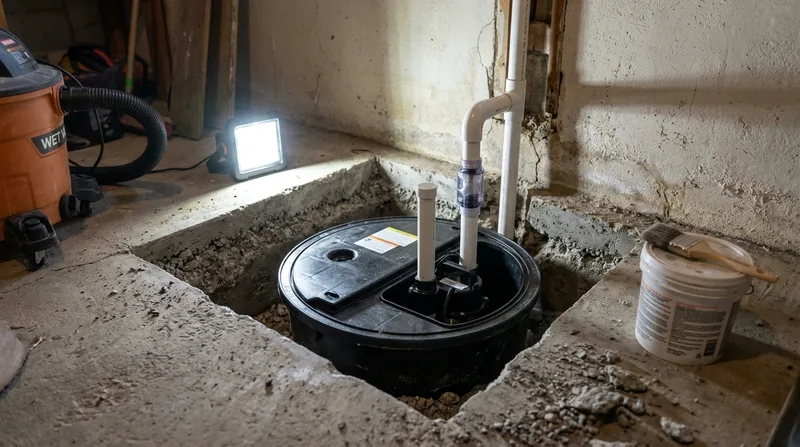




Dayton sits on glacial till and river-deposited silt and clay over limestone bedrock, and the Great Miami and Mad rivers keep the water table shallow in the river bottoms. That geology matters most in the older neighborhoods: the 1900s-1920s brick and frame homes of the Oregon District, Wright-Dunbar and Old North Dayton still run on stone, brick or early block walls and old clay footing drains that clog and collapse. Sump Pump Installation & Replacement in Dayton is the work we do most in spring, when thaw and April storms push water at those walls faster than a tired pump can move it. We size the pump to the basin and the inflow, seal the lid, set the check valve, and route the discharge so it does not freeze or dump back against the foundation. If you are still deciding between repair and replacement, start with a free basement inspection so we can measure what your pit actually handles.
Why Sump Pump Work Matters in Dayton's Older Basements and River Bottoms
Most Dayton sump failures trace back to three things: undersized pumps, open or unsealed basins that let silt and debris in, and discharge lines that dump water two feet from the wall or freeze solid in January. In the 1920s-1950s brick bungalows and Colonials of Belmont and South Park, the pit is often the only thing standing between a full basement and a wet floor after a June thunderstorm.
- Old clay footing drains in Wright-Dunbar and Old North Dayton carry silt into the basin, so the pump cycles constantly and burns out early.
- Shallow water tables in the river bottoms mean hydrostatic pressure keeps refilling the pit long after the rain stops.
- Freeze-thaw winters work on discharge lines that run flat or uphill, and trapped water splits the pipe or backflows into the basin.
- Unsealed basins let humid summer air condense on cool pit walls and feed moisture problems in the basement.
Getting the pump, basin and discharge right the first time is cheaper than replacing a burned-out unit every other spring.
Key info: A 1950s ranch in Huber Heights we serviced last April had a 1/3 HP pump running every 90 seconds during the thaw. The old clay tile was silted solid, so the pit was doing all the work. A correctly sized 1/2 HP pump, a sealed basin and a re-routed discharge line fixed the short cycling without touching the footing drain.
For the code side, sump discharge and any alteration to the drainage connection fall under local jurisdiction. Check the City of Dayton building department before you change how the discharge ties in, because thresholds vary by jurisdiction and must be verified.
How We Install and Replace Sump Pumps in Dayton Homes
We start by watching the pit under real conditions: after a rain, during a thaw, or with a hose metering inflow so we can size the pump to gallons per minute rather than guesswork. Then we build the basin and discharge around the house, not around a catalog spec.
- We inspect the existing pit, the drain tile entering it, and the discharge route before quoting anything.
- We cut and set a properly sized sump basin, bedded so it does not shift in glacial clay soil.
- We install a pump matched to measured inflow, with a sealed lid and a check valve to stop backflow.
- We route the discharge line with freeze protection and a slope that carries water well away from the foundation.
- We test under load, confirm the float trips cleanly, and walk you through the check valve and basin.
If the pit is filling because the footing drain is failing, no pump will fix that on its own. In those cases an interior drain tile system is often the better answer than a bigger pump.
Key info: In the 1990s-2020s subdivisions of Beavercreek and Vandalia, walkout basements on sloped lots need the discharge to daylight downhill, not into a window well. We route it to grade on the downhill side and add freeze protection at the outlet so a January cold snap does not split the line.
Sump Pump Approaches We Use in Dayton
Not every basement needs the same setup. A 1920s stone-wall basement in Old North Dayton behaves differently from a poured walkout in Springboro, and the right approach follows the building stock and the water table.
| Approach | Description | Best for |
|---|---|---|
| New sump pit and pump | Cut and bed a new basin, set a sized pump, sealed lid and check valve | Homes with no pit or a crumbling one |
| Pump replacement only | Swap a burned-out or undersized unit, keep the existing basin | Sound pit, failed pump |
| Discharge line correction | Re-route to a freeze-protected outlet away from the wall | Backflow, icing or soggy grading |
| Sealed basin with backup | Gasketed lid plus a battery backup on the same pit | River-bottom homes and frequent outages |
| Pit plus drain tile tie-in | Connect a new perimeter drain to the basin | Hydrostatic pressure from failed footing drains |
We will tell you plainly when a simple replacement is enough and when the pit is only the symptom.
Sump Pump Installation & Replacement Cost in Dayton: What to Expect
Most Dayton sump pump replacements start around From $1,200, and that figure covers a standard pump swap, a check valve and a basic discharge correction. The number moves with the pit, the pump and the route, not with the size of your house.
- A new basin cut into a 1920s stone or brick floor in Old North Dayton takes more labor than swapping a pump in a poured 1990s pit.
- Pump capacity drives price: a 1/2 HP unit for a river-bottom home costs more than a 1/3 HP unit for a daylight basement.
- Discharge routing matters: a long run to daylight uphill or through a finished wall adds time and materials.
- A sealed lid and battery backup add cost but change how the pit behaves during outages and humid summers.
- Emergency calls after a June storm or a January freeze cost more than scheduled work in a dry week.
Get two or three estimates and compare what is actually included, not just the bottom line. Our pricing overview breaks down the ranges in more detail.
Sump Pump Installation & Replacement Near Me: How to Choose a Dayton Contractor
Searching for a sump pump installer near Dayton turns up plenty of plumbers and general handymen. A dedicated basement waterproofing specialist reads the pit differently, because the pump is only one part of how water moves under the house.
- Confirm the contractor is licensed and insured, and ask for the certificate before work starts.
- Get multiple written estimates that separate the pump, the basin and the discharge line.
- Ask for references from Dayton-area homes with similar basements, not just new construction.
- Ask who pulls any permit required for altering the discharge or drainage connection, since rules vary by jurisdiction.
- Check HOA requirements in subdivisions like Beavercreek and Vandalia before changing where the discharge exits.
If an installer cannot explain why your pit fills the way it does, keep looking. You can contact us for a straight answer and a free estimate.
Sump Pump Installation & Replacement in Dayton: Pricing Guide
| Service | Price | Details |
|---|---|---|
| Pump replacement only | Starting at $1,200 | Includes a sized pump, check valve and testing in an existing sound basin. |
| New sump pit and pump | Starting at $2,400 | Cut and bed a new basin, sealed lid and discharge line in older floors. |
| Sealed basin with battery backup | Starting at $1,900 | Gasketed lid plus backup pump for river-bottom homes and frequent outages. |
| Discharge line correction | Starting at $650 | Re-routes the line to a freeze-protected outlet away from the foundation wall. |
| Complex or large-scale job | On estimate | Pit tied to a failing footing drain or a finished basement needs an on-site look. |
| Estimate | Free | Response within 24h at (937) 818-4090, no obligation to book. |
Indicative pricing, the exact cost depends on square footage, finish, and site access. Free personalized estimate within 24h at (937) 818-4090.


