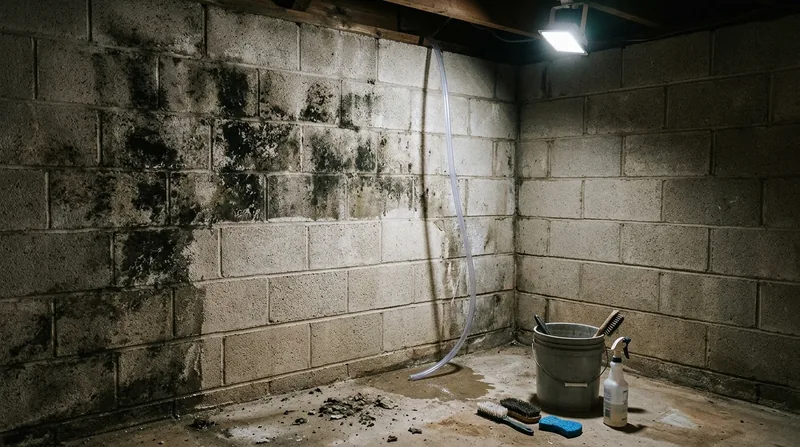




Dayton sits on glacial till and river-deposited silt and clay over limestone, with the Great Miami and Mad rivers cutting through the region and a shallow water table in the river bottoms. In the Oregon District, Wright-Dunbar and Old North Dayton, full basements behind stone, brick and early block walls were built without modern drainage, and their old clay footing drains have been failing for decades. Every April thaw and June thunderstorm pushes water through those walls, and by July the basement smells like a wet cellar. Basement Mold Remediation in Dayton starts with finding and fixing the moisture source, then removing the mold growth it fed, so the problem does not come back the next time the river rises. We handle the moisture side and the remediation together, because treating the mold without stopping the water is wasted money. Start with a free basement inspection and we will tell you plainly what is wet and why.
Why Basement Mold Grows So Fast in Dayton's Older Basements
Mold needs three things: moisture, organic material and still air. Dayton basements supply all three. The 1900s brick and early block walls in Belmont and South Park wick groundwater and hold it, the mortar and wood framing feed the growth, and a closed-up basement in a humid Midwest summer keeps the air still. Once a wall stays damp for a few days, mold colonizes the block face, the floor joists and anything stored against the wall. Mold is a moisture and building-materials problem, so we treat it as exactly that: control the moisture, remediate the growth, and prevent it from returning.
- Hydrostatic pressure pushes water through mortar joints and porous brick, keeping the lower wall permanently damp.
- Failed clay footing drains and cracked drain tile let water pool at the base of the wall instead of carrying it away.
- Sump pump failures during spring storms leave standing water and soaked framing behind.
- Efflorescence on the block is the visible sign that water is moving through the wall and leaving salts behind.
- Poor grading and short downspouts dump roof water against the foundation, feeding the same wall all year.
- Condensation on cool basement walls in humid summer air keeps surfaces wet even without a leak.
The pattern is consistent: where the wall stays wet, mold follows, and where we dry the wall, it stops.
Key info: A 1920s bungalow in South Park with a wet brick wall and a musty smell usually has two problems at once, a failed footing drain and wall seepage. Treating the mold without correcting the drainage means it comes back with the next June storm.
For official guidance on moisture and mold in buildings, see the U.S. EPA's mold resources, which cover moisture control and cleanup principles we follow in the field.
How We Remediate Basement Mold in Dayton, Step by Step
Our process runs from diagnosis to dry-in to treatment, in that order. We start with a musty smell diagnostic and a moisture walk-through of the basement, using a pin meter on the walls, joists and floor slab to map where the water is actually coming from. Then we fix the water path before we touch the mold, because remediation on a wet wall does not hold. The steps below are how a typical job in Kettering, Centerville or Huber Heights runs.
- We inspect the basement and identify the moisture source, whether that is wall seepage, a failed sump pump, a backed-up drain tile or condensation.
- We set up containment with plastic sheeting and negative air pressure so disturbed spores stay in the work area.
- We remove porous materials that cannot be cleaned, such as soaked drywall, insulation and cardboard.
- We treat affected block, concrete and framing with a remediation solution and HEPA-vacuum the surfaces.
- We correct the moisture problem with the right fix, from interior drain tile to crack injection or a new sump pump.
- We dry the space with dehumidification and verify moisture readings before we close out the job.
Only after the basement reads dry do we call the remediation complete, and we show you the readings.
Key info: A 1960s ranch in Huber Heights with a daylight basement had mold on the lower block wall and a musty smell every spring. The cause was a failed sump pump and a discharge line that dumped water back against the foundation. We replaced the pump, extended the discharge, treated the wall and dried the space, and the smell did not return the following April.
Remediation and Moisture-Control Methods We Use
Not every basement needs the same approach. A single damp corner behind a downspout is a different job from a wall that weeps under hydrostatic pressure every storm. The table below shows the methods we use and when each one is the right answer, so you can see where your basement fits before we arrive.
| Approach | Description | Best for |
|---|---|---|
| Surface remediation and HEPA cleaning | Containment, treatment of block and framing, HEPA vacuuming of all surfaces. | Mold on walls and joists where the moisture source is already corrected. |
| Drainage correction | Interior perimeter drain, drain tile repair or grading and downspout work. | Recurring wall seepage and wet floors after rain. |
| Sump pump replacement | New pump, basin and check valve, with battery backup where needed. | Standing water after storms and pump failures. |
| Crack injection | Epoxy or polyurethane injection through ports to seal seeping cracks. | Isolated wet cracks in poured walls. |
| Dehumidification and vapor control | Drying the space and sealing walls to stop condensation-driven dampness. | Humid summer basements with condensation rather than leaks. |
We match the method to the moisture source, and we tell you when a simple fix is enough.
Basement Mold Remediation Cost in Dayton: What to Expect
Most basement mold remediation jobs in Dayton start around $1,500, and that figure covers containment, treatment of the affected surfaces, HEPA cleanup and a moisture check. What moves the price is the size of the affected area, how many porous materials have to come out, and whether the moisture fix itself is a small repair or a full drainage correction. A single treated wall in a Belmont bungalow sits at the low end; a finished basement in Beavercreek with soaked drywall and a failed sump pump runs higher because removal and drying take longer. We quote the remediation and the moisture fix separately so you can see what each part costs. Get two or three estimates and compare scope, not just the number, and see our full pricing overview for detail.
Basement Mold Remediation Near Me: How to Vet a Contractor Near Dayton
When you search for basement mold remediation near me, the list you get is mostly companies with a truck and a sprayer. The work that matters is the moisture diagnosis behind the mold, so ask what they will do about the water, not just the growth. A contractor who only treats surfaces and never checks the drain tile or the sump is selling you a repeat job. Use the checklist below before you sign anything.
- Confirm the company is licensed and insured and ask for a certificate of insurance before work starts.
- Get at least two or three written estimates and compare what each one includes, especially the moisture fix.
- Ask for local references from basements similar to yours, such as old brick walls in Old North Dayton or poured walkouts in Vandalia.
- Ask whether a permit is needed, since structural foundation work and drainage changes often require one from the local building department, and rules vary by jurisdiction.
- Check HOA requirements before any exterior drainage or discharge changes, particularly in newer subdivisions.
If a contractor cannot explain how the water gets in, keep looking. Our contact page is the place to start a free inspection, and we will tell you honestly whether you need remediation or just a moisture fix.
Mold in a Dayton basement is a symptom, and the cure is dry walls and a working drainage system. Call Dayton Waterproofing at (937) 818-4090 to schedule a free inspection and get a straight answer on what your basement needs.
Basement Mold Remediation in Dayton: Pricing Guide
| Service | Price | Details |
|---|---|---|
| Single wall surface remediation | Starting at $1,500 | Containment, treatment of one affected wall, HEPA cleanup and moisture check included |
| Multi-wall or full basement remediation | Starting at $2,800 | Larger affected area, removal of soaked drywall and insulation, extended drying time |
| Remediation plus drainage correction | On estimate | Scope depends on whether the moisture fix is crack injection, drain tile or a new sump pump |
| Travel | Included | in Dayton and surrounding areas, no separate call-out or mileage fee |
| Estimate | Free | Response within 24h at (937) 818-4090, no obligation to book |
Indicative pricing, the exact cost depends on square footage, finish, and site access. Free personalized estimate within 24h at (937) 818-4090.


