



Basement Wall Sealing in Dayton: Stop the Seep Before It Spreads
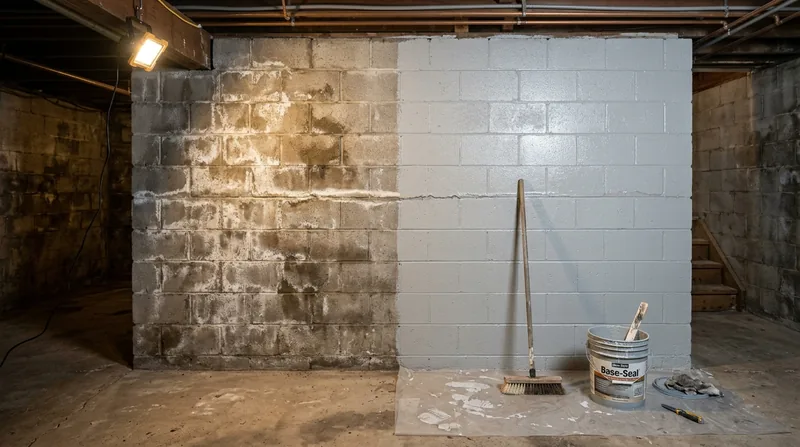
If you live in a 1920s brick bungalow in Belmont or a 1960s ranch in Kettering, you already know the feeling: a chalky white bloom on the block, a damp smell after an April storm, paint peeling off the lower wall. Basement Wall Sealing in Dayton starts with an honest read of what is actually pushing moisture through your wall. The ground here is glacial till and river-deposited silt and clay over limestone, and the Great Miami and Mad rivers keep the water table shallow in the bottoms. Spring thaw and June thunderstorms send water against stone, brick, and early block walls that were never built for today's saturation. We prep the surface, remove efflorescence, and apply penetrating or membrane sealers, but only after we tell you whether a sealer is the right tool or whether hydrostatic pressure means you need drainage instead. Call (937) 818-4090 or start with a free basement inspection.
Why Basement Wall Sealing Matters in Dayton's Older Housing Stock
Dayton's basement walls fail in a predictable pattern, and it is driven by the building stock, not by bad luck. The Oregon District, Wright-Dunbar, and Old North Dayton are full of 1900s brick and frame homes on full basements with stone, brick, or early block walls and old clay footing drains that have long since collapsed or silted shut. Belmont and South Park have 1920s to 1950s brick bungalows and Colonials, most with full basements. Kettering, Centerville, and Huber Heights added 1950s to 1970s ranches and split-levels with daylight or partial basements. Each of these walls behaves differently, and each one tells you something different when it gets wet.
- Efflorescence appears when water moves through the wall and leaves mineral salts on the surface, which is a sign of active moisture travel, not just a cosmetic stain.
- Damp patches and peeling paint on block or poured walls usually point to vapor drive or minor seepage that a sealer can address.
- White powder that returns after cleaning means the wall is still wicking moisture from the soil side, and sealing over it without diagnosis traps the problem.
- Musty basement smell after rain is a moisture-control issue, and sealing alone will not fix it if water is pooling at the footing.
- Rust stains or water lines near the floor tell you the water table is rising against the wall during spring thaw and heavy storms.
If you see any of these signs, the first step is a proper look at the wall, not a bucket of sealer from a big-box store.
Key info: In Old North Dayton and the Oregon District, we routinely find stone and early brick walls with soft mortar and failing parging. Sealing those walls without repointing the mortar first is a waste of money, because the sealer cannot bond to crumbling mortar. We check the mortar joints before we quote any sealer work.
For a broader look at how wall sealing fits into a full moisture-control plan, see the basement waterproofing service page. You can also verify local permit requirements through the City of Dayton building department, since rules vary by jurisdiction and must be confirmed for your address.
How We Approach Basement Wall Sealing in Dayton Homes
We do not sell sealer as a cure-all. We start by identifying what is actually happening at the wall: capillary suction, vapor drive, or hydrostatic pressure. Those are three different problems, and only the first two are sealer jobs. If water is standing against the footing after a storm, a sealer will fail within a season, and we will tell you that plainly before you spend a dollar.
- We walk the basement and grade, check the downspout extensions, and look for efflorescence, rust lines, and wall cracks.
- We test the wall surface and mortar joints to confirm the substrate will accept a sealer.
- We remove efflorescence and loose parging with wire brushes and appropriate cleaners, then let the wall dry to a stable moisture level.
- We fill non-structural cracks and voids with the appropriate patching material before any coating goes on.
- We apply a penetrating sealer for damp masonry or a membrane sealer for block and poured walls, depending on what the wall needs.
- We document the application and give you a clear maintenance note on grading and downspout extensions.
If the diagnosis points to pressure rather than dampness, we say so and point you toward drainage instead of selling a coating that will not hold.
Key info: A 1958 ranch in Huber Heights had efflorescence on the lower three courses of block and a musty smell every June. The wall was damp, not under pressure, and the footing drain was still moving water. We removed the efflorescence, patched two hairline cracks, and applied a penetrating sealer. That was the right scope. A 1920s home near South Park with water lines at the floor was a different story, and there we recommended an interior drain tile system because the clay footing drain had failed.
Sealer Approaches We Use on Dayton Basement Walls
Not every wall takes the same product. Stone, brick, block, and poured concrete behave differently, and the wrong sealer can trap moisture or peel within a year. This table shows the approaches we use and when each one is the right call.
| Approach | Description | Best for |
|---|---|---|
| Penetrating sealer | Soaks into masonry pores and reacts to block water without forming a surface film. | Damp brick and block walls with efflorescence but no standing pressure. |
| Membrane sealer | Forms a flexible coating on the wall face and bridges hairline cracks. | Poured walls and block walls with minor seepage and stable mortar. |
| Parging repair plus sealer | Replaces failed parging and seals the repaired surface in one scope. | Older stone and brick walls in the Oregon District and Old North Dayton. |
| Crack fill plus sealer | Fills non-structural cracks before sealing so the coating has a continuous surface. | Block and poured walls with shrinkage cracks and damp patches. |
| Diagnostic only | We test the wall and tell you if sealing is the wrong answer for your moisture source. | Walls with water lines, rust stains, or pressure after heavy rain. |
If the diagnostic points to pressure, the honest answer is drainage, and we will show you why before you spend money on a coating.
Basement Wall Sealing Cost in Dayton: What to Expect
Most basement wall sealing projects in Dayton start around From $1,500, and that figure reflects the real labor of surface prep, efflorescence removal, crack filling, and material application on a typical basement wall run. The number moves based on the wall material, the square footage, how much parging has failed, and whether we find active pressure that changes the scope. A small damp patch on a poured wall in Beavercreek is a different job than a full stone wall in Old North Dayton with soft mortar that needs repointing first.
Factors that affect the price include the wall type (stone, brick, block, or poured), the total wall area, the condition of the mortar and parging, access to the basement, and whether cracks need filling before sealing. Getting two or three estimates is smart, and it protects you from a quote that skips the prep work. A cheap sealer job on a wall that needs repointing will fail, and you will pay twice. For a fuller breakdown of how we price this work, see our pricing overview.
Basement Wall Sealing Near Me: How to Choose a Contractor Near Dayton
When you search for basement wall sealing near me, you will get a mix of dedicated waterproofing specialists, general foundation-repair firms, and plumbers who sub the work out. The difference matters, because wall sealing is a diagnostic trade. Ask whether the company is licensed and insured, ask for references from jobs in your part of Dayton, and ask what they do when the wall turns out to be under pressure instead of just damp. A contractor who only sells coatings will sell you a coating. A specialist will tell you when sealing is not the answer.
Permits are commonly required for structural foundation repair and for work that alters drainage or the sanitary connection of a sump discharge, and thresholds vary by jurisdiction. Confirm requirements with your local building department before work starts. If your home is in a historic district, check any additional review requirements before scheduling. To schedule an inspection or ask a question, reach out through our contact page.
Basement Wall Sealing in Dayton: Pricing Guide
| Service | Price | Details |
|---|---|---|
| Damp wall sealing, small area | Starting at $1,500 | Surface prep, efflorescence removal, crack fill, and sealer on a limited wall run. |
| Full basement wall sealing | Starting at $2,400 | Complete wall prep and sealer application, priced by wall material and total square footage. |
| Parging repair plus sealing | Starting at $3,200 | Failed parging replaced and sealed on older stone or brick walls with soft mortar. |
| Complex or large-scale job | On estimate | Multi-room basements, historic-district homes, or walls needing repointing before sealing. |
| Travel | Included | In Dayton and surrounding areas, no separate call-out or mileage fee. |
| Estimate | Free | Response within 24h at (937) 818-4090, no obligation to book. |
Indicative pricing, the exact cost depends on square footage, finish, and site access. Free personalized estimate within 24h at (937) 818-4090.


