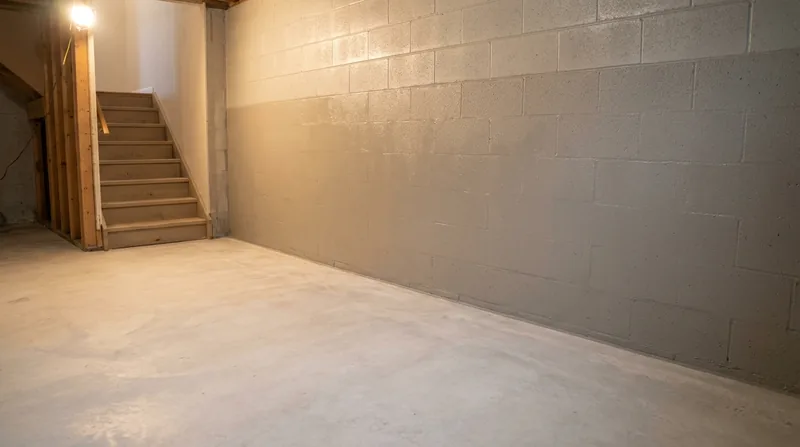




What a Free Basement Inspection in Dayton Actually Covers
Dayton sits on glacial till and river-deposited silt and clay over limestone, and the Great Miami and Mad rivers keep the water table shallow in the bottoms. That geology pushes water toward older walls every spring thaw and after the heavy April and June storms. If you are seeing seepage, efflorescence, or a musty smell, a Free Basement Inspection in Dayton from Dayton Waterproofing gives you a straight answer before you spend a dollar on repairs. We walk the basement and the exterior grade, check the walls, floor, cracks, sump system, gutters, and downspouts, and hand you photos plus a written explanation of what needs fixing now, what can wait, and whether anything is wrong at all. You can see the full scope of our basement waterproofing services before we arrive.
Why Dayton Basements Take on Water and Why an Inspection Comes First
The housing stock here tells the story. Oregon District, Wright-Dunbar, and Old North Dayton have 1900s-1920s brick and frame homes on full basements with stone, brick, or early block walls and old clay footing drains that have long since collapsed or silted shut. Belmont and South Park are full of 1920s-1950s brick bungalows and Colonials with full basements, and Kettering, Centerville, and Huber Heights added 1950s-1970s ranches and split-levels with daylight or partial basements. In Beavercreek, Vandalia, and Springboro, the 1990s-2020s subdivisions sit on sloped lots with poured walkout basements. Each era fails differently, and the inspection identifies which one you are dealing with.
- Hydrostatic pressure pushes water through stone and brick mortar joints in older Dayton walls, which is a drainage problem, not a crack problem.
- Shrinking and settling clay soil pulls away from foundation walls and creates a direct path for surface water after summer thunderstorms.
- Freeze-thaw winters work existing cracks open a little wider every year, so a hairline in October can be a wet floor by March.
- Original clay footing drains in pre-1950 homes are often crushed, root-filled, or disconnected from the sump basin.
- Grading that slopes back toward the house and short downspouts dump roof water right at the foundation.
The inspection sorts these causes so you fix the real one, not the symptom. For the official local rules on any repair that follows, start with the City of Dayton building department.
Key info: A 1925 brick bungalow in Belmont with white powder on the wall and a damp floor is usually showing efflorescence from hydrostatic pressure, not a failing wall. A 1998 poured walkout in Beavercreek with one wet corner is usually a grading and downspout issue. Same symptom, different fix.
How We Run the Inspection from the Driveway to the Sump Basin
We start outside and work in, because most basement water starts at the grade line. The inspection takes 45 to 90 minutes depending on the size and age of the house, and you get the findings the same day. We do not sell during the walkthrough. We document, explain, and let you decide.
- We check the exterior grade, downspout extensions, window wells, and any signs of settlement along the foundation.
- We inspect the basement walls for cracks, bowing, efflorescence, and damp patches, and photograph each one.
- We test the sump pump, check the check valve and discharge line, and confirm the basin is clean and correctly sized.
- We look at the floor, the cove joint, and any staining that shows where water has traveled.
- We trace the drain tile and footing drain where visible, and note whether the system is original clay or updated.
- We write up what needs fixing now, what can wait, and what is purely cosmetic, with photos attached.
If the inspection points to a specific repair, we tell you which one and why, whether that is foundation crack repair or a drainage correction.
Key info: On a 1962 ranch in Huber Heights, we found the sump pump running but the discharge line frozen at the wall penetration in January. The pump was fine. The line was the problem. That is the kind of thing a walkthrough catches that a phone call cannot.
Inspection Findings and What They Usually Mean
Every inspection ends with a finding, and the finding drives the recommendation. Here is how we map what we see to the work that actually solves it.
| Approach | Description | Best for |
|---|---|---|
| Crack sealing with epoxy or polyurethane injection | Ports are set along the crack and resin is injected to fill it full depth. | A single active crack in a poured wall with no other moisture. |
| Interior perimeter drain and sump basin | A drain channel is cut at the cove joint and tied to a sump basin and pump. | Hydrostatic pressure under a full basement floor, common in Belmont and South Park. |
| Exterior waterproofing with membrane and dimple board | The wall is excavated, parged, membrane-coated, and backfilled with drainage stone. | Stone or brick walls with failed original footing drains and room to dig. |
| Grading and downspout correction | Soil is regraded to slope away and downspouts are extended well past the foundation. | A wet corner in a newer Beavercreek or Vandalia walkout with no wall cracking. |
| No repair needed | The inspection finds only cosmetic staining or a dry wall with old efflorescence. | Homeowners who want confirmation before buying or finishing a basement. |
We tell you plainly when simple crack sealing is enough and when the real problem is hydrostatic pressure that needs drainage, not another tube of caulk.
Free Basement Inspection Cost in Dayton: What to Expect
The inspection itself costs nothing. That is the starting point, and it stays free whether you hire us or not. What varies is the repair that follows, and the inspection is what tells you which repair you are actually looking at. A single injected crack in a Kettering poured wall is a small job. A full interior drain tile system under a 1920s stone-wall basement in Old North Dayton is a different scope entirely.
Cost factors we identify during the inspection include the length of wall involved, whether the drain tile is original clay or already updated, whether the sump basin needs replacement, how accessible the exterior is for excavation, and whether the work triggers a permit. That is why we hand you a written scope instead of a number over the phone. Getting two or three estimates is smart, and we encourage it. Compare scope, not just price. Our full pricing overview shows how the numbers break down.
Free Basement Inspection Near Me: How to Choose a Dayton Contractor
Searching for a free basement inspection near me in Dayton returns a lot of names, and not all of them do the same work. Some are general foundation-repair firms, some are plumbers who handle sump pumps only, and some are dedicated basement waterproofing specialists. Ask what they actually do every week, and ask for references from homes built in the same era as yours. A contractor who works mostly on new construction is not the right call for a 1920s brick foundation.
- Confirm the company is licensed and insured, and ask for the certificate before work starts.
- Get two or three written estimates and compare the scope line by line, not just the total.
- Ask for local references from Dayton, Kettering, or Oakwood homes similar in age to yours.
- Ask who pulls the permit if the repair is structural or alters drainage, and verify the rule with the local building department.
- Check for HOA requirements if you live in a Beavercreek or Springboro subdivision before any exterior excavation.
If a contractor will not put the scope in writing or cannot explain why they recommend one repair over another, keep looking. You can contact us to schedule the free inspection and we will put everything in writing before you commit to anything.
Free Basement Inspection in Dayton: Pricing Guide
| Service | Price | Details |
|---|---|---|
| Free basement inspection | Free | Full walkthrough of walls, floor, cracks, sump system, grading, and gutters with photos and written findings. |
| Inspection with sump pump test | Free | Includes pump cycle test, check valve inspection, and discharge line review at no charge. |
| Inspection for real estate transaction | Free | Written moisture findings for buyers or sellers, scheduled within a few business days. |
| Complex or large basement | Free | Multi-room or finished basements take longer on site but the inspection fee stays at zero. |
| Travel | Included | in Dayton and surrounding areas, no separate call-out or mileage fee |
| Estimate | Free | Response within 24h at (937) 818-4090, no obligation to book |
Indicative pricing, the exact cost depends on square footage, finish, and site access. Free personalized estimate within 24h at (937) 818-4090.


