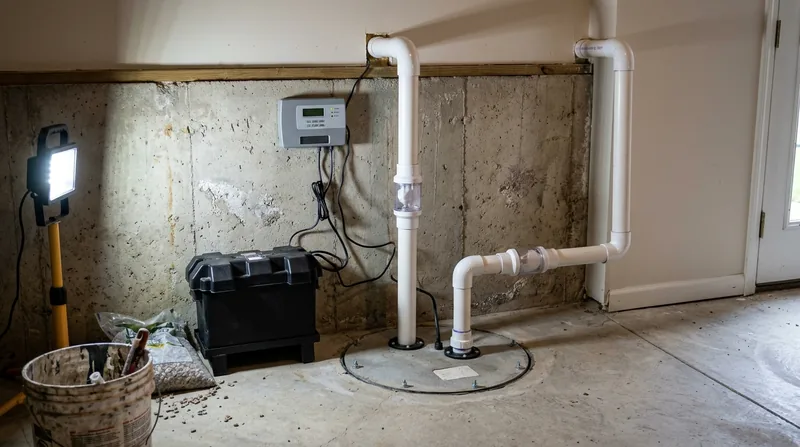




Dayton sits on glacial till and river-deposited silt and clay over limestone, and the Great Miami and Mad rivers keep the water table shallow in the river bottoms. In the Oregon District, Wright-Dunbar and Old North Dayton, 1900s brick and frame homes still drain through old clay footing drains that clog and collapse. Belmont and South Park bungalows from the 1920s through the 1950s have full basements that take on water every spring thaw. When an April or June storm knocks out power, the sump pump stops exactly when the pit is filling. Battery Backup Sump Pumps in Dayton keep the basin pumping through the outage instead of letting hydrostatic pressure win. We size the battery to your pit, your pump and your typical outage length, and we test it before we leave. Start with a free basement inspection and we will tell you straight whether a backup is what you need.
Why Dayton Basements Need Backup Power, Not Just a Sump Pump
Summer thunderstorms and spring storm fronts roll across the flat Midwest sky and take the grid down with them. In Kettering and Huber Heights, 1950s and 1960s ranches and split-levels have partial basements where the pit fills fast once the clay soil saturates. In Beavercreek, Vandalia and Springboro, newer poured walkout basements on sloped lots depend on a primary pump that is useless the moment the breaker trips. A primary pump with no backup is a single point of failure, and the failure always happens during the storm that caused the flooding.
- Power outages during heavy rain stop the primary pump while the water table is still rising.
- Older clay footing drains in Old North Dayton surcharge and dump water into the basin faster than a dead pump can handle.
- Freeze-thaw winters work foundation cracks open, so spring thaw sends more water to the pit than in summer.
- Primary pumps burn out or trip on overload after long storm runs, often with no warning.
A backup system buys you hours of pumping when the grid is down and gives you an alarm before the water reaches the floor.
Key info: A Belmont bungalow we inspected had a working primary pump but no backup. A June outage left the pit filling for four hours, and the finished side of the basement took on two inches. A battery backup with a high-water alarm would have kept that floor dry.
Dayton's building department and the Ohio contractor rules govern how discharge lines and electrical connections are handled, so check the City of Dayton's official site for current permit requirements before any work alters your drainage or sump discharge.
How We Size and Install a Battery Backup in Dayton
We do not sell a box and walk away. We look at your pit, your primary pump, your discharge line and how long your neighborhood typically sits dark after a storm. In Centerville and Miamisburg, where lots are larger and outages can run half a day, we size the battery and charger for real runtime, not a brochure number. In the tighter 1920s blocks of South Park, we fit the backup and alarm into a shallow basin without disturbing the existing lid.
- We inspect the sump basin, check valve and discharge line to confirm the primary pump is worth backing up.
- We measure pit depth and width and match the backup pump and float to the basin.
- We mount the battery and charger on a shelf or bracket clear of rising water.
- We wire the backup to the existing discharge with a check valve so the two pumps do not fight each other.
- We add a high-water alarm and test the whole system under load before we leave.
If the primary pump is undersized or the basin is too small, we say so and quote a sump pump installation or replacement before adding a backup on top of a weak system.
Key info: A Huber Heights split-level had a 12-inch basin and a pump that cycled every 40 seconds during a storm. We upsized the basin, replaced the primary and added a battery backup with an alarm. The next June storm ran the backup for six hours without a drop on the floor.
Backup Options We Install in Dayton
Not every basement needs the same system. A finished basement in Oakwood with a deep pit and a long outage history needs more runtime than a bare utility basement in Trotwood. We match the equipment to the pit and the risk, and we explain the tradeoffs in plain terms before you choose.
| Approach | Description | Best for |
|---|---|---|
| Battery backup pump with charger | A dedicated 12V backup pump and float in the same basin, wired to a trickle charger. | Most Dayton homes with a standard pit and short outages. |
| Extended runtime battery bank | Larger or dual batteries sized for long outages and high inflow. | Centerville and Beavercreek lots where outages run half a day. |
| High-water alarm and float switch | An alarm that sounds before water reaches the floor, plus a backup float. | Finished basements and homes with a history of pump failure. |
| Primary pump replacement plus backup | A new primary pump, check valve and discharge line with a backup added on top. | Older systems in Belmont and Old North Dayton with a weak primary. |
| Basin upsizing with backup | A larger basin to handle inflow, with the backup and alarm installed together. | Shallow 1950s pits in Kettering and Huber Heights that cycle too fast. |
We test every configuration under load, so you know the runtime before the next storm tests it for you.
Battery Backup Sump Pumps Cost in Dayton: What to Expect
Most battery backup installations in Dayton start at $900 and go up from there. The number depends on the battery size and runtime you need, whether the primary pump and basin are worth keeping, and how much electrical work the charger and alarm require. A simple backup on a sound existing system sits near the low end. A full primary replacement, basin upsizing and extended battery bank pushes toward the high end.
- Battery capacity and runtime are the biggest cost drivers, since longer outages need larger or dual batteries.
- Basin condition matters: a cracked or undersized pit adds labor before the backup can go in.
- Electrical access affects the price, especially in older Dayton homes with no outlet near the pit.
- Alarm and float upgrades add a modest amount and are worth it in any finished basement.
Get two or three written estimates and compare what is actually included, not just the bottom line. Our full pricing overview lays out the ranges so you can check each quote against a real baseline.
Hiring a Waterproofing Contractor Near Me in Dayton: What to Check
Anyone can sell a battery and a pump. The difference is in the sizing, the wiring and the testing, and in whether the contractor stands behind the work when the next storm hits. Ask questions before you sign, and do not accept a verbal scope.
- Confirm the contractor is licensed and insured and ask for a certificate of insurance.
- Get at least two or three written estimates that list equipment, battery capacity and labor separately.
- Ask for references from Dayton-area homeowners with the same basement type and pit depth.
- Ask who handles the permit if the discharge line or electrical connection changes, and confirm the local building department's rules.
- Check that the warranty is transferable and in writing, and that it covers the battery and the pump.
If a quote is vague about battery runtime or skips the load test, keep looking. You can contact us for a free estimate and we will put the scope in writing before any work starts.
Battery Backup Sump Pumps in Dayton: Pricing Guide
| Service | Price | Details |
|---|---|---|
| Battery backup on an existing sound pump | Starting at $900 | Includes backup pump, float, charger and load test on a standard basin. |
| Backup with high-water alarm and float upgrade | Starting at $1,150 | Adds an alarm that sounds before water reaches the floor in a finished basement. |
| Primary pump replacement plus battery backup | Starting at $1,450 | New primary pump, check valve and discharge line with backup installed on top. |
| Extended runtime dual battery bank | Starting at $1,750 | Sized for long outages and high inflow on larger or sloped lots. |
| Basin upsizing with backup and alarm | On estimate | Needs an on-site look to size the basin and confirm discharge routing. |
| Estimate | Free | Response within 24h at (937) 818-4090, no obligation to book. |
Indicative pricing, the exact cost depends on square footage, finish, and site access. Free personalized estimate within 24h at (937) 818-4090.


